Progressive overload
Adding weight, reps or sets over time, and how to plan it.
Nine programs, 1394 movements, and the concepts behind them. All inside the app.
Pick one, follow the plan, adapt it as you go.
Three sessions a week, every muscle group each time.
No equipmentPush, pull, squat and core. No equipment needed.
4 daysUpper body and lower body, each trained twice a week.
DumbbellsPush, pull, legs on rotation. Dumbbells only, six days.
MachinesSame split, machines only. Easier to load on your own.
AdvancedOne muscle group per session.
Power + sizeTwo heavy days, two volume days, upper and lower each time.
5 daysTwo power days, three hypertrophy days opening on speed work.
StrengthFive barbell lifts, five sets of five, three days a week.
Pick a muscle group, then the exact muscle.
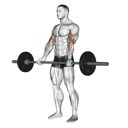 330 exercises
Biceps, triceps, forearms
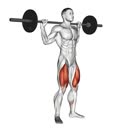 323 exercises
Glutes, quads, hamstrings, calves
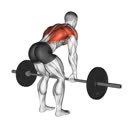 203 exercises
Upper back, lats, traps, spine
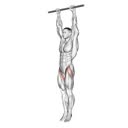 176 exercises
Abs and the whole midsection
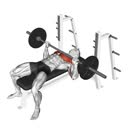 163 exercises
Pectorals, serratus anterior
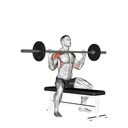 145 exercises
Front, side and rear delts
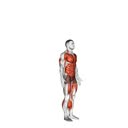 37 exercises
Machines and bodyweight conditioning
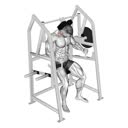 17 exercises
Levator scapulae and cervical spine
The concepts behind every program, in plain language.
Adding weight, reps or sets over time, and how to plan it.
Rep ranges and rest times for strength, size or endurance.
How much sleep and how many rest days a training week needs.
Daily protein, calories and macros around training.
Range of motion, tempo and the common technique errors.
Spotting a stall, and how to run a deload week.
Protein, calories, hydration, and the supplements worth buying.
Grams per kilo of bodyweight, and where to get them.
Estimating your maintenance, then eating above or below it.
How much water a training day needs.
What to eat before and after a session.
Creatine, protein powder, caffeine: doses and evidence.
Effect on sleep, protein synthesis and next-day performance.