The short answer
“3 × 8–12” means three sets of eight to twelve repetitions. A rest value indicates the break between sets. The exercise name identifies the movement; the linked page shows the equipment and execution steps.
Read one line at a time
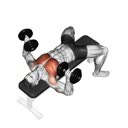
Example: “dumbbell bench press · 3 × 8–12 · rest 2 min”. Read it as the exercise, the number of sets, the repetitions per set and the planned rest. Warm-up work, where needed, is separate from those working sets.
Seconds are not repetitions
A plank can use a duration such as 30–45 seconds. A curl usually uses repetitions. Keep the unit in your notes so that “30” cannot be mistaken for thirty reps. For a unilateral exercise, check whether the instructions specify each side.
A session is not a weekly schedule
A programme can provide sample sessions A and B while asking you to train three days a week. The number of different session templates is not always the number of weekly sessions. Read both the weekly frequency and the description.
Open the movement before loading it
The exercise sheet identifies the main muscle, equipment and execution steps. Compare the video with the written instructions. Alternative exercises are options to inspect, not automatic equivalents at the same load.
Keep the plan and the result separate
The plan might say 3 × 8–12. Your result might be 10, 9 and 8. Record the repetitions actually performed and the weight used. The next time you return to the movement, you have something concrete to compare.
Put it into practice
About this guide
STARK editorial guide. Examples explain how to use the library and record training; they are not individual coaching.
The session examples come from the STARK program catalogue linked above.