The short answer
To lose fat without losing muscle, combine a moderate calorie deficit with regular strength training and a high protein intake. A loss of about 0.5 to 1 % of body weight per week is a common target to protect muscle. Keep training heavy enough to maintain your strength, and track both your weight trend and your lifts.
Why lift weights when you want to lose weight
A calorie deficit makes you lose weight, but part of it can be muscle. Strength training gives your body a reason to keep that muscle. The result: the weight you lose is mostly fat, and you keep your strength and shape.
How fast to lose weight
Losing too quickly increases the risk of losing muscle and makes the diet harder to sustain. A 2014 review by Helms and colleagues suggests about 0.5 to 1 % of body weight per week to preserve muscle. For someone weighing 80 kg, that is roughly 0.4 to 0.8 kg per week.
Protein: higher than usual
In a deficit, protein helps protect muscle. The same review suggests about 2.3 to 3.1 g per kg of lean body mass per day for lean, trained people dieting. For most people, a simpler target of around 1.6 to 2.2 g per kg of body weight is a practical starting point.
Keep training, adjust the volume
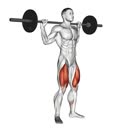
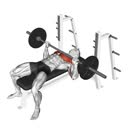
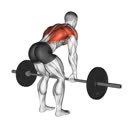
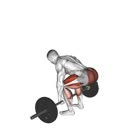
Keep the main lifts in your programme and try to hold your loads. If recovery suffers, reduce the number of sets before reducing the weight. Holding your strength during a diet is already a success.
Measure the trend, not the day
Body weight moves day to day with water and food. Weigh yourself under the same conditions several times a week and follow the weekly average. In your log, check that your main lifts stay stable. If you have a medical condition or a lot of weight to lose, get advice from a health professional.
Put it into practice
About this guide
STARK editorial guide. Examples explain how to use the library and record training; they are not individual coaching.
Training principles: Helms, Aragon & Fitschen (2014), Journal of the International Society of Sports Nutrition.
The session examples come from the STARK program catalogue linked above.