The short answer
Research links more weekly sets per muscle with more muscle growth, up to a point. Around ten hard sets per muscle per week is a common reference for intermediate lifters; beginners progress with less. Count only working sets, and increase volume gradually rather than all at once.
What counts as a set
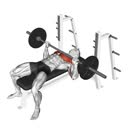
Count working sets taken reasonably close to failure, not warm-up sets. Three sets of bench press on Monday and three on Thursday make six weekly sets for the chest. Writing them in a log makes the count automatic.
What the research says
A 2017 meta-analysis by Schoenfeld and colleagues found a dose-response relationship: performing ten or more weekly sets per muscle was associated with greater gains in muscle size than fewer than five. More is not endlessly better; recovery, sleep and the rest of your week set the limit.
Practical ranges by level
Beginners: around six to ten weekly sets per muscle is usually enough to progress. Intermediate: ten to twenty is a common working range. Start at the lower end, then add one or two sets per muscle when progress stalls and recovery is good. These are references, not targets to hit at all costs.
Compound exercises count for several muscles
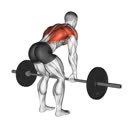
A row trains the back and also the biceps; a bench press involves the triceps and shoulders. A simple convention is to count a full set for the main muscle and half a set for the muscles that assist. Each sheet in the library lists the main and secondary muscles.
Spread the volume across the week
Twenty sets for one muscle in a single session is hard to do well. Splitting them over two or three sessions keeps the quality of each set higher. That is one reason full body, upper/lower and PPL plans train each muscle more than once a week.
Put it into practice
About this guide
STARK editorial guide. Examples explain how to use the library and record training; they are not individual coaching.
Training principles: Schoenfeld, Ogborn & Krieger (2017), Journal of Sports Sciences.
The session examples come from the STARK program catalogue linked above.