The short answer
Rest about two to three minutes between sets of heavy compound lifts, and one to two minutes on lighter or isolation exercises. Longer breaks let you keep your reps and load across sets. Shorter rest is not better for building muscle; it mostly makes each set harder.
Why rest matters
Rest lets you recover enough to repeat a good set. If you start the next set too early, your reps drop even though the weight did not change. Over several sets, that lost work adds up.
What the research says
In a 2016 study, Schoenfeld and colleagues compared one-minute and three-minute rests in trained men doing the same programme. The three-minute group gained more strength and more muscle thickness on several measures. Longer rest let them keep more total work.
Practical rest times
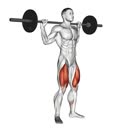
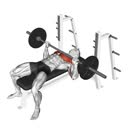
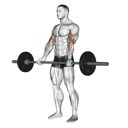
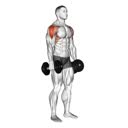
Heavy compound lifts such as the squat, bench press or deadlift: two to three minutes, up to five for very heavy sets. Moderate compound work: about two minutes. Isolation exercises such as curls or lateral raises: one to two minutes is usually enough.
When shorter rest makes sense
When time is tight, you can rest less on isolation exercises or alternate two exercises for different muscles, resting while the other muscle works. Keep the rest time similar from week to week so your sessions stay comparable.
Time your rest instead of guessing
Breaks tend to get shorter or longer without you noticing. A rest timer keeps them consistent, so a change in your reps reflects your strength, not a shorter pause.
Put it into practice
About this guide
STARK editorial guide. Examples explain how to use the library and record training; they are not individual coaching.
Training principles: Schoenfeld et al. (2016), Journal of Strength and Conditioning Research.
The session examples come from the STARK program catalogue linked above.