The short answer
For muscle growth, the two exercises in each pair work the same main muscles and both build them when you train them close to failure with enough sets. The real differences are the equipment, how much your body has to stabilise, the load you can lift and how easy the movement is to learn. Pick the one you can do with good technique and progress on week after week; many programs use both.
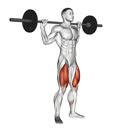
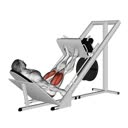
Squat or leg press: which is better?
Verdict: Both build the quads and glutes. The squat trains more muscles at once, including the trunk, and carries over better to everyday movement and other lifts. The leg press is easier to learn, lets you push the legs hard without the back as a limit, and is a good alternative if squatting does not suit you.
| Criterion | Squat | Leg press |
|---|---|---|
| Main muscles | Quads, glutes, adductors, trunk | Quads, glutes, adductors |
| Load you can lift | Heavy, limited by technique and trunk | Very heavy; numbers are not comparable with a squat |
| Learning curve | Technical: depth, bracing, bar position | Simple: sit, place your feet, push |
| Equipment | Barbell and rack | Leg press machine |
| Best for | Overall strength and athleticism | Leg volume, beginners, back or mobility limits |
Which one for you?
- Squat: if you have a rack and want one lower-body lift that does a lot.
- Leg press: if you want extra leg work without loading the spine, or you are still learning to squat.
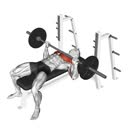
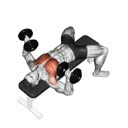
Barbell or dumbbell bench press?
Verdict: You will usually lift more total weight with the barbell, which makes it easier to load and to track strength. Dumbbells let each arm find its own path, often allow a slightly deeper stretch and reveal side-to-side differences. For chest growth both work; many lifters pair a heavy barbell press with dumbbell work later in the session.
| Criterion | Barbell bench | Dumbbell bench |
|---|---|---|
| Main muscles | Chest, triceps, front delts | Chest, triceps, front delts, more stabilisers |
| Load you can lift | Heavier in total | Lighter in total; getting heavy dumbbells into place is the limit |
| Learning curve | Easy to learn, needs a spotter or safeties | Needs balance; harder to set up as weight rises |
| Equipment | Barbell, bench, rack | Pair of dumbbells, bench |
| Best for | Maximal strength, small load jumps | Range of motion, balance between sides, home gyms |
Which one for you?
- Barbell bench: if you want to build pressing strength and add weight in small steps.
- Dumbbell bench: if your shoulders prefer a free path, or you train without a rack or spotter.
Deadlift or Romanian deadlift?
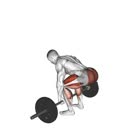
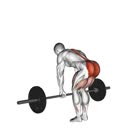
Verdict: The deadlift starts from the floor with more knee bend, so you lift more and train the whole back of the body plus grip. The Romanian deadlift starts standing, keeps the knees softly bent and lowers only as far as your hamstrings allow, which puts the focus on the hamstrings and glutes under a long, controlled lowering phase. Choose the deadlift for overall strength, the Romanian deadlift for hamstring and glute growth.
| Criterion | Deadlift | Romanian deadlift |
|---|---|---|
| Main muscles | Glutes, hamstrings, back, quads, grip | Hamstrings, glutes, lower back |
| Load you can lift | Heaviest lift in most programs | Lighter, usually 60 to 80 % of the deadlift |
| Learning curve | Technical setup from the floor | Hip hinge to learn; no reset between reps |
| Equipment | Barbell, plates | Barbell or dumbbells |
| Best for | Total strength | Hamstring and glute volume |
Which one for you?
- Deadlift: if you want to build full-body pulling strength and test heavy singles or triples.
- Romanian deadlift: if you want hamstring-focused work that is easier to recover from.
Pull-ups or lat pulldown?
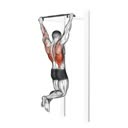
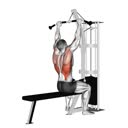
Verdict: Both train the lats and biceps with the same vertical pull. Pull-ups move your whole body and also ask a lot of the trunk and grip, but you need to be able to do a few reps first. The lat pulldown lets you set any load, so it suits beginners, high-rep work and anyone who cannot yet do a pull-up. Progress on the pulldown carries over to pull-ups, and the reverse is true as well.
| Criterion | Pull-up | Lat pulldown |
|---|---|---|
| Main muscles | Lats, biceps, upper back, trunk | Lats, biceps, upper back |
| Load you can lift | Your body weight, plus a belt to add more | Any load, in small steps |
| Learning curve | Hard to start: you need one clean rep | Easy from day one |
| Equipment | Pull-up bar | Cable pulldown station |
| Best for | Relative strength, minimal equipment | Beginners, controlled volume, high reps |
Which one for you?
- Pull-up: if you can already do several clean reps, or you train with only a bar.
- Lat pulldown: if you cannot do a pull-up yet, or you want to add back volume at a precise load.
Hip thrust or squat for the glutes?
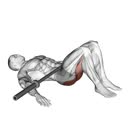
Verdict: The barbell hip thrust (glute bridge) loads the glutes hardest at the top, when the hips are extended; the squat loads them most at the bottom, in a stretched position, and trains the quads at the same time. In a 2023 study, ten weeks of either exercise produced similar glute growth, while only the squat increased quad size. Use the squat as the base, and add the hip thrust if you want extra glute work.
| Criterion | Barbell hip thrust | Squat |
|---|---|---|
| Main muscles | Glutes, hamstrings | Quads, glutes, adductors, trunk |
| Load you can lift | Heavy, easy on the spine | Heavy, the trunk has to hold the bar |
| Learning curve | Simple once the setup is right | Technical |
| Equipment | Barbell, bench, pad | Barbell and rack |
| Best for | Targeted glute volume | Glutes and legs together |
Which one for you?
- Barbell hip thrust: if you want more glute work without adding much fatigue to the legs or back.
- Squat: if you want one exercise for the glutes and the quads.
Incline or flat bench press?
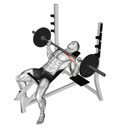
Verdict: Both work the whole chest. The incline bench shifts more of the work to the upper chest and front of the shoulders, and you lift a little less. The flat bench lets you lift the most and trains the middle and lower chest more. A program with both covers the chest more completely; if you only pick one, keep the one you progress on.
| Criterion | Incline bench | Flat bench |
|---|---|---|
| Main muscles | Upper chest, front delts, triceps | Mid and lower chest, triceps, front delts |
| Load you can lift | A little lighter | The heaviest pressing lift |
| Learning curve | Same technique, bench at about 30 to 45° | Standard technique |
| Equipment | Incline bench or adjustable bench | Flat bench |
| Best for | Upper chest, shoulders | Pressing strength |
Which one for you?
- Incline bench: if your upper chest lags, or flat pressing bothers your shoulders.
- Flat bench: if you want the lift where you can add the most weight.
Push-ups or bench press?
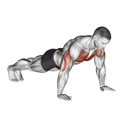
Verdict: They are the same pressing pattern. When the effort is comparable, studies find similar muscle activity and similar strength gains: Calatayud and colleagues (2015) matched push-ups with bands to the bench press and saw equal progress. The bench press is simpler to load heavy and to track; push-ups need no equipment and train the trunk too, but you have to make them harder (feet raised, bands, a weighted vest) once sets get long.
| Criterion | Push-up | Bench press |
|---|---|---|
| Main muscles | Chest, triceps, front delts, trunk | Chest, triceps, front delts |
| Load you can lift | Body weight; add bands, a vest or elevation | Any load, in small steps |
| Learning curve | Easy to start, harder to keep progressing | Easy to learn, needs safeties |
| Equipment | None | Barbell, bench, rack |
| Best for | Home training, high reps | Measurable strength progress |
Which one for you?
- Push-up: if you train at home or want a pressing exercise you can do anywhere.
- Bench press: if you want to add weight steadily and track it precisely.
Front squat or back squat?
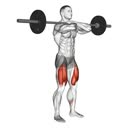
Verdict: With the bar on the front of the shoulders, the torso stays more upright: the front squat puts more emphasis on the quads and upper back and, for a similar effort, produces lower compressive forces at the knee (Gullett et al., 2009). The back squat lets you lift more weight and involves the glutes and hips a little more. The back squat is the usual main lift; the front squat is a good variation or substitute.
| Criterion | Front squat | Back squat |
|---|---|---|
| Main muscles | Quads, upper back, trunk | Quads, glutes, adductors, lower back |
| Load you can lift | Usually 70 to 85 % of the back squat | Heavier |
| Learning curve | Rack position needs wrist and shoulder mobility | Easier bar position for most people |
| Equipment | Barbell and rack | Barbell and rack |
| Best for | Upright posture, quads | Maximal lower-body strength |
Which one for you?
- Front squat: if you want more quad and upper-back work, or a variation that is gentler on the lower back.
- Back squat: if you want to lift the most weight on your main leg exercise.
Pull-ups or chin-ups?
Verdict: Both are vertical pulls on a bar. Chin-ups, with palms facing you, bring in the biceps more, and most people manage a rep or two more. Pull-ups, palms facing away, leave a bigger share of the work to the back and are usually the harder version. Both build the lats; alternate them, or keep the one that feels better on your elbows and shoulders.
| Criterion | Pull-up (overhand) | Chin-up (underhand) |
|---|---|---|
| Main muscles | Lats, upper back, biceps | Lats, biceps, upper back |
| Load you can lift | Body weight, usually slightly fewer reps | Body weight, usually slightly more reps |
| Learning curve | The harder of the two to start | Often the first one people manage |
| Equipment | Pull-up bar | Pull-up bar |
| Best for | Back width | Back and biceps together |
Which one for you?
- Pull-up (overhand): if you want the back to do the work and can already do a few reps.
- Chin-up (underhand): if you are working towards your first reps or want more biceps involvement.
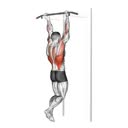
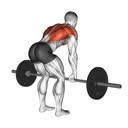
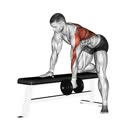
Barbell row or one-arm dumbbell row?
Verdict: Both are horizontal pulls for the upper back and lats. The barbell row lets you lift more but your lower back has to hold the bent-over position for the whole set. The one-arm dumbbell row, with a hand on a bench, supports the torso, gives a longer range of motion and trains each side on its own. If your lower back tires before your upper back, the dumbbell row is the better pick.
| Criterion | Barbell row | One-arm dumbbell row |
|---|---|---|
| Main muscles | Upper back, lats, rear delts, lower back | Lats, upper back, rear delts |
| Load you can lift | Heavier in total | Lighter per side, but well supported |
| Learning curve | The hip hinge has to stay stable | Easy to set up |
| Equipment | Barbell, plates | One dumbbell, bench |
| Best for | Overall back strength | Range of motion, each side separately |
Which one for you?
- Barbell row: if you want a heavy compound pull and your lower back holds the position well.
- One-arm dumbbell row: if you want back work with a supported torso, or one side is weaker.
About this comparison
STARK editorial guide. The verdicts summarise how each exercise is usually used in training; they are not individual coaching. If an exercise causes pain, choose the alternative or ask a qualified professional.
Studies cited: Plotkin et al. (2023), Frontiers in Physiology — hip thrust vs back squat · Calatayud et al. (2015), Journal of Strength and Conditioning Research — bench press vs push-up · Gullett et al. (2009), Journal of Strength and Conditioning Research — back vs front squat.