The short answer
Yes. Muscles respond to effort, not to the type of resistance: sets taken close to failure build muscle even with your own body weight. The challenge is progression: once you can do many reps, make the exercise harder with a slower tempo, a harder variation or a single-limb version. Legs are the hardest to load without equipment.
Muscles do not know where the load comes from
Calatayud and colleagues (2015) compared push-ups with elastic bands to the bench press at a similar effort: strength gains were the same. What counts is getting close to failure on each set.
Progress without adding weight
Add reps up to about 20 to 30, then make the exercise harder: feet raised for push-ups, a slow three-second lowering, pauses, or a single-limb version such as the pistol squat or the archer push-up.
The essential movements
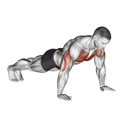
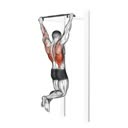
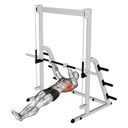
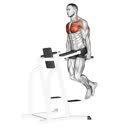
Push-ups and dips to push, pull-ups and inverted rows to pull, squats and lunges for the legs, plus a core exercise. A pull-up bar is the one piece of equipment worth buying.
The limit: the legs
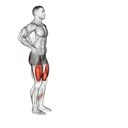
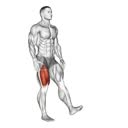
Your legs carry your body weight all day, so bodyweight squats quickly get easy. Use single-leg exercises (lunges, Bulgarian split squats, pistols), jumps and slow tempos, or add a loaded backpack.
When weights become useful
If you can do more than 30 reps of the hardest variation you know, or want to get as strong as possible, external load makes progression simpler. Until then, a well-run bodyweight program is enough to build muscle.
Put it into practice
About this guide
STARK editorial guide. Examples explain how to use the library and record training; they are not individual coaching.
Training principles: Calatayud et al. (2015), Journal of Strength and Conditioning Research.
The session examples come from the STARK program catalogue linked above.